

8 Crowdfunding Projects We Loved To See This Year!
Every year at ioby, we are in awe of the projects leaders come up with to strengthen their communities. As we celebrate our 15th year, that couldn’t be more true.
In every inch of the country, people have deepened their neighborhood bonds through ground-breaking ideas, from farms growing delicious, organic produce in Upstate New York to free jazz concerts in Northwest Arkansas and storytelling workshops for climate resiliency in frontline communities worldwide.
Here are 8 of the crowdfunding projects we loved to see this year—and all of them are still raising funds! If you feel inspired, share and donate to celebrate the holidays. Plus, you can use these crowdfunding examples to brainstorm projects for your own community in the New Year. Already have a great idea? Share your idea with us and we can help!
Continue reading 8 Crowdfunding Projects We Loved To See This Year!Report from The Field: The Northwest Arkansas Neighborhood Match Program
Do you live in Arkansas’ Benton & Washington Counties? If so, you can be part of ioby’s transformative network of neighborhood leaders that have doubled their impact through our match partnership with the Walton Family Foundation. So far, the program has supported everything from folk music instrumental repairs to a Dia de los Muertos celebration.
Continue reading Report from The Field: The Northwest Arkansas Neighborhood Match Program10 Climate-Conscious Projects We Love
Many scientists and activists have declared this decade “make or break” for climate action, and if you step outside, it is not difficult to understand why. Whether you’ve experienced extreme heat waves or intensifying drought, it’s clear that the climate crisis is already having a tangible impact on the world around us. With such high stakes, it is essential for groups—both small and large—to take action for a liveable future. However, such action can often feel daunting. The climate crisis is unfurling at a global scale, we might ask ourselves, so is it really possible to make change at the local level? The answer is yes and no. It is essential to organize against corporations such as oil companies, which are the largest contributors to global emissions by far. However, local action can help us discover solutions that can have a much larger impact than we might originally believe. Plus, it allows us to embody the future we hope to live in, resisting despair and embracing a better world. If you’re looking for some inspiration, we’ve outlined 10 projects to stop climate change we love.
Hungry for more? Check out our new Active Transporation Toolkit, which highlights projects using transportation to address climate change and create healthier communities.
Continue reading 10 Climate-Conscious Projects We Loveioby’s Comprehensive Guide to End-of-Year Fundraising
It’s the end of the year, which means gathering with friends and family, celebrating the holidays, and—yes—fundraising. According to Double the Donation, 30% of all annual fundraising happens during the month of December. This makes the last four weeks of the year crucial for next year’s success, but that pressure can be overwhelming. How do you know even know where to begin? With limited time and capacity, what’s most important to focus on? What’s the best way to demonstrate all that you’ve accomplished this year?
Continue reading ioby’s Comprehensive Guide to End-of-Year FundraisingIntroducing: ioby’s Active Transit Toolkit
Active transit refers to any form of transportation that does not require a car to get around. This includes walking, biking, and taking public transportation such as the subway or the bus. In fact, many of us participate in active transit each and every day in neighborhoods without knowing it.
Continue reading Introducing: ioby’s Active Transit ToolkitPalestine and Our Commitment to Anti-Racism, in Our Neighborhoods and Everywhere
We at ioby, like many in our communities, have felt helpless, angry and sickened by the recent violence in Palestine and Israel. This crisis is many miles from the neighborhoods where ioby works, and yet it has felt close to home for so many of us.
Continue reading Palestine and Our Commitment to Anti-Racism, in Our Neighborhoods and EverywhereSustaining Justice in our Neighborhoods, Block by Block
These neighborhood leaders are continuing the fight for racial justice, from mutual aid projects in Brownsville, Brooklyn to maternal health training in Pittsburgh, Pennsylvania.
Continue reading Sustaining Justice in our Neighborhoods, Block by Blockioby’s Step-by-Step Guide to Raising Funds & Building a Network of Donors You Love
Here at ioby, we believe in the power of small groups coming together to fundraise for big change. Through this step-by-step guide, we’ll outline the steps to cultivating meaningful relationships with donors that will sustain your work over the long haul. You don’t need to reinvent the wheel with each project you launch, so let’s dive in and make those dollars stretch as far as they can, block by block!
Continue reading ioby’s Step-by-Step Guide to Raising Funds & Building a Network of Donors You Loveioby’s Comprehensive Guide to Creative Placekeeping
If you’re a neighborhood leader who wants to find creative, strategic ways to maintain the spirit and vibrancy of your community, look no further! ioby’s comprehensive guide to creative placekeeping outlines everything you need to know to launch a transformative project in your neighborhood. Maybe you heard about placekeeping through the NEA creative placemaking and placekeeping grants, or maybe there’s a cultural site in your community that you are longing to preserve. Either way, this guide will give you the tools you need to ideate, launch, and maintain a compelling creative placekeeping project.
Continue reading ioby’s Comprehensive Guide to Creative Placekeeping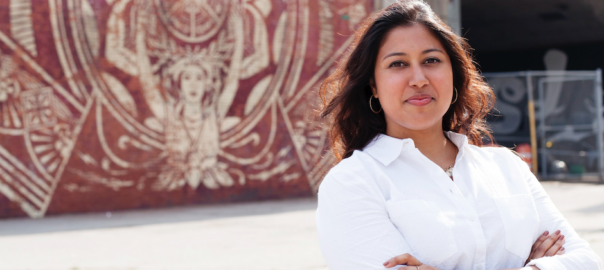
Meet Nupur Chaudhury, ioby’s New CEO!
We’re thrilled to announce that our new CEO, Nupur Chaudhury, will begin leading ioby’s next chapter at the end of August.
Nupur brings more than 20 years of experience in nonprofit, government, and philanthropy, working to support residents, communities, and neighborhoods in building just and equitable spaces. She has led coalition building efforts after Superstorm Sandy, redeveloped power structures in villages in India, and developed a citizen planning institute for public housing residents in Brownsville, Brooklyn. She was the founding Director of Neighborhood Health at New York City’s Center for Health Equity, directed the Building Healthy Communities funding initiative for the New York Health Foundation, and founded NupurSpectives, a consulting firm that centers communities for equitable change. Read Nupur’s complete bio on her web site.
Nupur’s hire is the culmination of a monthslong executive search led by ioby’s Board of Directors and Axis Talent Partners, with extensive input from ioby’s entire community, including staff, partners, project leaders, and supporters.
“As ioby’s Board chair, I couldn’t be more excited to be starting our new chapter of ioby’s critical work under Nupur’s leadership,” said Board chair Apollo Gonzales, “The intersectional lens she brings as a public health urbanist, and her strong commitment to supporting communities fighting for self-determination, are rooted in the same values that have long guided our work at ioby. We see Nupur’s leadership as a continuation, a rededication, and a strengthening of those shared values.”
“After co-founding and leading this organization for the past fifteen years, it was important to me to know that ioby’s next CEO would bring clear-eyed vision to the needs of our communities and the strengths of the staff and Board,” said founding CEO Erin Barnes, who will serve in an advisory and transition support role in the coming months, “Nupur doesn’t just share some theoretical framework about movement-building; she has done the work. For many years, in multiple roles, across sectors, she has built systems to support resident leaders in creating the communities they want to see. She knows the joy, and the challenges, that come with this beloved work. With the existing senior management, Nupur completes the dream team of leadership. I know she will lead ioby with empathy, creativity, and love.”
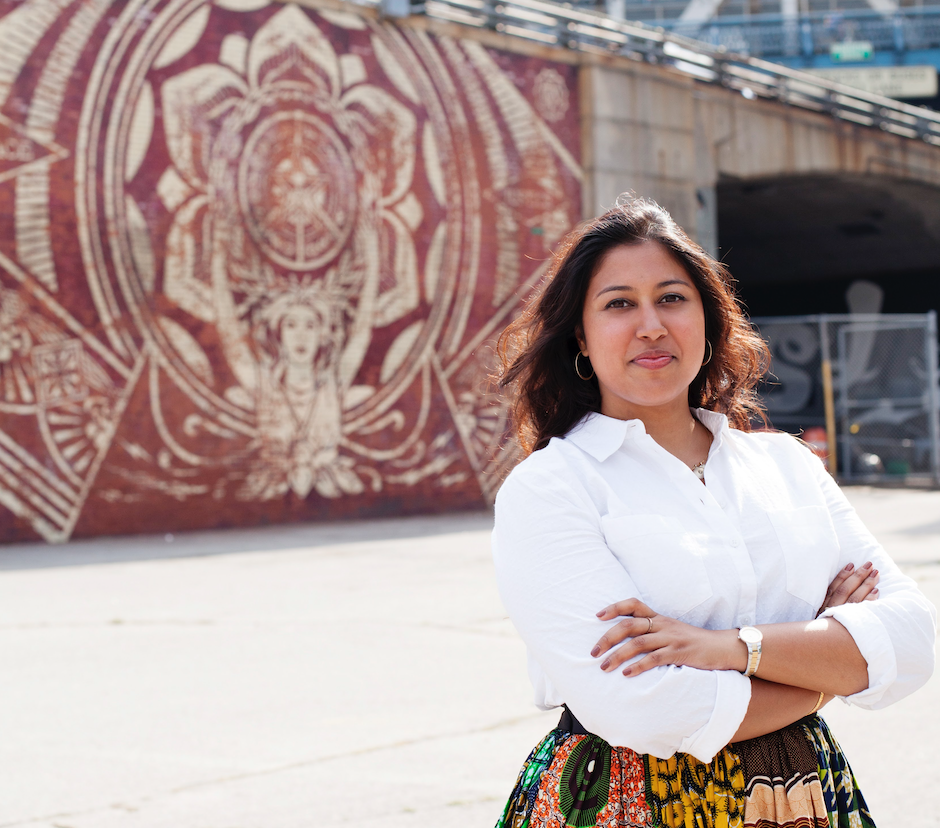
We asked Nupur about the experiences that have led her to ioby, and what she’s most excited about in her new role, in a Q&A:
You’ll be in a new role, but you’re not new to ioby. What are some of the ways you’ve collaborated with us in the past?
So many ways! So much of my work and approach is rooted in Brownsville, Brooklyn, where I worked as an organizer. That’s where I first saw ioby support change through the vision of amazing Black women like Brenda Duchane of Isabahlia Ladies of Elegance Foundation and Dionne Grayman and Sheila Gordon of We Run Brownsville.
Even before that, I had met Erin Barnes at a folding table at the annual Hike the Heights in Washington Heights. I met her there through Lourdes Rodriguez, a founding board member of ioby and one of ioby’s first project leaders, and I remember thinking, “WOW! This sounds so cool and interesting!”
I’ve even experienced ioby as a user! When supporting friends working in Orange, NJ, we appreciated the power of ioby’s model, and saw the immense opportunities there.
When I was a funder at NYHealth Foundation, I had the honor of funding the first ioby match program across New York State, and worked to support ioby as they built out the model so that it could be replicated in Kansas through the Kansas Health Foundation.
And then, of course, I’ve always collaborated as a fan. I’ve loved connecting folks—maybe too many folks?—to ioby’s team to see if there’s a “there there.” I’ve always found ioby’s team to be deep listeners and strategic connectors–exactly what you need when creating change–and I wanted everyone I knew to feel that love from ioby’s team.
You’ve been in a number of different roles in spaces from urban planning to philanthropy to grassroots organizing. What has tied all of your work together?
I see all my work as deeply connected, and tied to the idea of shared liberation and collective belonging.
As a public health urbanist, I look at communities, cities and connections through a grassroots lens. As a daughter of immigrants, I work at the intersection of three languages, two religions, and three countries. I’ve always been an outsider, which is why I fight so hard for inclusion and belonging in the work that I do.
I’m the granddaughter of an Indian freedom fighter, so the right for self-determination is deep in my DNA. I’m always fighting to co-create the just world that my grandfather began to build, that he was incarcerated for: one where everyone has a sense of belonging, where each voice matters, where all are free.
What motivates the work that I do is the fact that large systems purported to be about health are built around hospitals and clinics, where health providers are your doctors and nurses, and your medicine comes in the form of a pill or a surgery. I work to disrupt these systems and re-build the concept of health around the fact that health is a park, a wide sidewalk, a tree canopy. That your health providers are your neighbors, your teachers, your friends. That your medicine comes in the form of a conversation, your involvement in a block association or community group, or learning a new skill.
It is for this reason that all my work, whether working deep with neighborhoods across NYC or across the country, revolves around building the capacity and leadership of people, organizations and places. This interplay, rather than just that of clinics, doctors, and medicine, is what I believe truly creates health.
What does ioby’s mission, to mobilize civic leaders to make positive change in their own neighborhoods, mean to you?
I believe that ioby’s mission is the North Star for this country.
On a national scale, I see the Biden administration working to figure out how to carry out this work and mobilize folks through their Interagency Community Investment Committee, and the recent release of the Equitable Development Fact Sheet.
On a neighborhood scale, the ability to mobilize and support civic leaders is everything—it ensures fidelity and longevity in the work, but it also ensures that the change that happens is the right change—defined by neighborhood leaders. I saw this so clearly when working with the women of We Run Brownsville, a super fundraiser on ioby’s platform.
On a personal scale, ioby is the organization that I wish had been around while I was growing up in the suburbs of Boston, a little girl saw possibilities for a better neighborhood around her, but didn’t know how to make it happen.
We often say that technology can’t be value neutral, and that we need to deliberately design our systems, especially our technologies, to actively reduce bias and work toward antiracism. What are your thoughts on the role of tech in antiracism work?
I agree that technology has an opportunity to reduce bias, and yes, technology can play a role in antiracism work. But I’ll go one step further and say that if we aren’t centering folks of color, specifically Black folks, in the development of technology and of systems, then we aren’t doing enough.
As a South Asian woman married to a Black man, my family experiences how technology has failed to center the experience of Black and Brown folks in so much of the technology we use—everything from washroom sinks failing to detect my brown skin, to ID photos failing to color correct so that they can detect my husband’s features—the message we get over and over again is that these technologies were not designed for us, and that we do not matter enough to change the design of that technology.
We can escape this dynamic by creating processes that allow us to design systems and technology that center Black and Brown folks. And we can go beyond this idea of centering to have Black and Brown folks be the tech and systems designers themselves! The opportunity to be in THAT space will get us on that path of shared liberation, which is everything.
The staff at ioby centers the people they serve and ioby’s technology development is guided by a digital inclusion policy. This is why I’m so excited to work with Andrew Lomax, ioby’s Chief Technology Officer, and the team to explore the possibilities for this work.
What’s most interesting and exciting to you about ioby right now?
EVERYTHING. I can’t wait to delve deep into the user experience for local leaders in neighborhoods across the country to understand how ioby can better serve them. I’m excited about getting to know the staff and what THEY are interested in. I can’t wait to engage with longtime friends, partners, and funders of ioby and understand what’s on their mind. And I’m thrilled to engage with folks who don’t know a thing about our beloved organization, and see how we can work together to build positive change nationally.
You’ll be hearing much more from Nupur in the coming months, as she steps into her new role as CEO at the end of August. Make sure to subscribe to our newsletter to get the latest updates on this leadership transition and all other ioby news.